The brain is the seat of all vital functions in the human body. How well you nourish it will determine how well you will function in your life. Although the composition and capacity of the human brain are far beyond complex, taking care of it is really not that difficult. And taking care of your brain and improving its health is essential to living a healthy and happy life. Here are 50 things you can do to exercise the brain, and optimize and improve your brain's health and function. Many of these things are seemingly basic and very obvious, but are just as important.
Each activity will have two ratings given to it.
Many experts say that fish is the ultimate food for the brain because of its omega-3 content. These essential fatty acids have anti-cancer and anti-inflammatory properties, and are thought to reduce the incidence of hemorrhagic stroke. Research studies also suggest its effect on improving brain function. According to Gomez-Pinilla, omega-3 fatty acids increase levels of molecules important for neuroplasticity such as the brain-derived neurotrophic factor (BDNF), a neurotrophin that regulates the survival, growth and differentiation of nerve cells.
N-back tasks are a series of performance tasks used as an assessment tool in cognitive neuroscience to evaluate a certain area of the short-term memory. Considered as the cornerstone brain-training exercise, the n-back task is also considered as a method to boost fluid intelligence. It requires a person to mentally juggle several things simultaneously.
Through a number of experiments have been conducted over the past decade, Susanne Jaeggi of the University of Maryland, College Park, and others have found that participants who train with n-back tasks over the course of approximately a month for about 20 minutes per day not only get better at the n-back task itself, but also experience transfer to other cognitive tasks on which they did not train.The effects generalize to important domains such as attentional control, reasoning, reading, or mathematical skills, Jaeggi says. Many of these improvements remain over the course of several months, suggesting that the benefits of the training are long lasting.ÃÃÃÃÃÃÃÃÃÃÃÃÃÃÃÃ There are several good n-back apps on both the Android and Apple marketplace; the one I use is Brain N-Back.
Eat leafy vegetables.
Effectiveness rating: Effective
Scientific Rating: High
Spinach not only did make Popeye strong; it also made him think more clearly.
Spinach and other leafy green vegetables contain essential vitamins and minerals that help prevent dementia. And just like spices, these foods are rich in polyphenols that shield the brain from injury and disease. The antioxidants found in leafy greens have also been associated with preventing the recurrence of strokes and the delaying of symptoms of Parkinson's and Alzheimer's disease.
Integrate nuts into your diet.
Effectiveness Rating: Effective
Scientific Rating: Medium
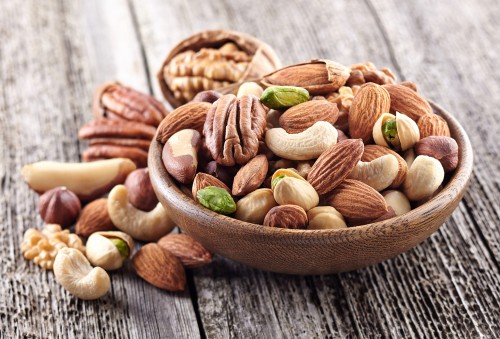
If only squirrels can talk, they could have said that it only takes nuts to boost your brain power. Nuts and seeds are packed with zinc that greatly enhances cognitive performance. A group of physicians at the Duke University Medical Center, North Carolina have studied the effect of zinc on the transmission of impulses in the brain, and discovered that zinc enhances nerve function by regulating the plasticity of synapses (gaps in between neurons that serve as areas of impulse transmission). In addition, nuts and seeds contain vitamin E: a powerful antioxidant that enhances cognitive skills.
Eat foods containing Folic Acid and B12.
Effectiveness rating:=Slightly Effective
Scientific Rating: Medium

Bread, pasta, and some fortified cereals contain folic acid which regulates neurotransmitter activity and promotes brain development. Aside from these, fish, eggs, and milk contain vitamin B12 that protects brain tissue from disease and injury. A study by Tangney et. al. investigated the effects of vitamin B12 to cognition using MRI cross-sectional examination, and they discovered that B12 preserves cognitive ability by preventing cerebral infarcts (brain death).
Load up with complex carbs.
Effectiveness rating: Effective
Scientific Rating: High
Aside from the lack of oxygen, insufficient glucose intake is another reason why people have difficulty thinking and concentrating. The brain needs glucose for its metabolism. The intake of complex carbohydrates increases alertness by breaking down glucose into adenosine triphosphate (ATP). Aside from taking energy drinks, go for food that offers energy for the whole day like whole-wheat bread, oatmeal, and brown rice.
Drink coffee.
Effectiveness rating: Highly Effective
Scientific Rating: Medium

Coffee is a natural stimulant that activates the sympathetic nervous system, the part of the brain that speeds up cognitive functioning. On top of that, coffee is rich in antioxidants that are responsible for promoting the recovery of your neurons against injury and stress. Research studies show that an 8 oz.-cup of coffee is just enough to optimally improve attention and short-term memory. Feeling drowsy? Make a stop at Starbucks and get a triple venti mocha frappucino! Top it with a little cinnamon or nutmeg for some extra boost.
An apple a day keeps memory loss at bay
Effectiveness rating: Slightly Effective
Scientific Rating: Low
Never underestimate the power of this classic fruit. Research suggests that quercetin, a chemical found in apples, has neuroprotective properties against cell damage. Most of quercetin is in the apple skin, so make sure you eat them as well. Aside from apples, quercetin is also found in citrus fruits, parskley, sage, onions, red wine, and tea.
Navigate cities.
Effectiveness rating: Highly Effective
Scientific Rating: Low
Do you know why taxi drivers seem to know all the streets and places? It's because they have a highly developed spatial ability. There are nine types of intelligence, and one of them is spatial intelligence, which involves the ability to map one's environment. Woollett and Maguire studied this ability with London taxi drivers (as compared to bus drivers), and they found through neuroimaging studies that taxi drivers display structural changes in the portion of the brain that is involved with spatial memory moreso than the control group (bus drivers). The reason this is because taxi drivers have to use their brains to navigate their cities and find routes whereas bus drivers travel a set route. So next time you wanna go somewhere and are tempted to use the GPS, try to navigate without it instead.
Fight brain aging with grape juice.
Those children who appeared in Welch's commercials sure got a head start in preventing cognitive decline. Just like chocolate, grape juice contains polyphenols that enhance communication of neurons, memory, and learning abilities. In a study conducted by Krikorian et. al., it was found through magnetic resonance imaging that elderly people who regularly drink grape juice demonstrate improved
short-term memory.
Chew gum.
Do you think Michael Jordan knows that his habit of chewing gum while playing basketball improves his alertness? Whether he knows it or not, chewing gum does help. According to the Center for Occupational and Health Psychology at Cardiff University, there is evidence that chewing gum improves aspects of cognitive function, mood, along with selective and sustained attention. Another study explored the effects of chewing gum on memory, mood, learning, and performance, and showed that chewing gum increases alertness and intellectual performance. In addition to improving cognitive function, chewing gum is also a great stress reliever.
Power up with chicken and eggs.
Whichever came first doesn't really matter in this case both foods are great sources of choline, a precursor molecule of acetylcholine. Acetylcholine is a vital neurotransmitter that regulates body functions and improves memory and cognitive performance, a deficiency of which is associated with degenerative disorders like Alzheimer's disease. In addition, it is also linked with the prevention of neural tube defects in fetal development, anxiety, and depression.
Eat dark chocolates.
Aside from its high sugar content, chocolate contains flavonols that give a short-term boost in cognitive skills. In addition, polyphenols in cocoa are found to prevent cognitive impairment of aging people. Bisson et. al. studied the long-term effects of cocoa polyphenolic extract on cognitive performance of aging mice, and they observed that the treated mice displayed increased thinking abilities when they were subjected to different environmental stimuli.
Sugar intake of not more than 25 grams can boost alertness and improve memory. Glucose is an essential nutrient for metabolism and a primary energy source for the brain, deficiencies of which result in many neurologic symptoms like loss of consciousness, impaired thinking ability, and memory loss. So, in place of other unhealthy, sugary delights, go for a bar of dark chocolates to satiate your sweet tooth and keep your brain healthy at the same time.
Drink milk.
A glass of milk daily can help you boost your memory and thinking skills. A research article published in the
International Dairy Journal reveals that adults who drank milk at least five or six times a week displayed better memory than those who rarely drank them.
Source
Do regular cardio.
Physical exercise doesn't just benefit your body, but your brain as well. Aerobics are an excellent routine to improve circulation and oxygen delivery to your brain cells. Henriette van Praag, a researcher at the Neuroplasticity and Behavior Unit of the National Institute of Health in Baltimore, emphasized the accumulating evidence of the profound benefits of exercise to the brain. Aerobic exercises not only enhance learning and memory; they also prevent and delay the loss of cognitive function. So the next time you need to rev up your brain for an exam, go and do some jumping jacks and aerobic exercises.
Put on some muscle.
Pumping up some weights doesn't just tone and add bulk to your muscles; it improves your mental capacity as well. In a study conducted at the Psychobiology and Exercise Research Center in Sao Paolo, Brazil, researchers found that spatial memory and cognitive functioning improve with resistance exercise and aerobics through the increased activity of the brain-derived neurotrophic factor (BDNF) a substance that controls nerve cell growth. Not only that, resistance exercise is also associated with the formation of new nerve cells (neurogenesis). So when you're lifting weights, keep in mind that you're also pumping up for your brain.
Dance.

A study published in the New England Journal of Medicine was conducted to determine if there's a relationship between leisure activities (including dancing) and the likelihood of dementia among elderly people. Although there is no evidence yet that dancing directly decreases the risk, the people who routinely dance seem to experience less behavioral symptoms. In addition, dancing is found to improve coordination and planning. Looking for something to boost your brain? Get it on the dance floor!
Take up golf.
This sport didn't just help Tiger Woods tone his arms; it developed his coordination and spatial differentiation, too. A study was conducted at the Institute of Psychology at the University of Zurich to see if golf induces the formation of new nerve cells. Using neuroimaging studies, they discovered that there were structural changes in gray and white matter of the parieto-occipital area of the brain (the areas involved with spatial orientation and coordination) when the test subjects played golf. The research also established that the intensity of golf training also increases these structural changes.
Listen To Music While Exercising
People just get hyped when they listen to their favorite music while exercising, and people like Miranda Kerr even have a routine playlist for every exercise circuit that she does. Music doesn't just motivate; it stimulates cognitive functions as you exercise as well. Charles Emery, a professor of psychology at Ohio State University, studied the combined effects of music and short-term exercise on mental exercise, and found that heart patients demonstrated improved verbal fluency after listening to music and exercise.
Mow the lawn
A study published by the UK Telegraph Company presents evidence that lawn mowing helps release a chemical that boosts memory and relieves stress in the elderly. Lawn mowing is also an excellent way to exercise, helping your brain get the right amount of nutrients and oxygen.
Doodle

Your teacher back in high school may have fed you with the notion that doodling, instead of taking down notes, is a purely mindless activity. However, some experts disagree and claim that students doodle because of their need to stimulate the brain. Even the world's most prominent leaders can attest to that. In 2005, former British Prime Minister Tony Blair attended a world economic forum, where he participated in a panel with Bill Clinton, Bill Gates, and U2 frontman, Bono. After the panel, journalists were surprised to see that the papers near his seat were covered with doodles.
Let your mind wander.
There are times when your mind just wants to drift away. This isn't actually bad. In fact, experts say that you shouldn't hold back your mind from wandering because it gives way to cognitive benefits such as increased creativity and problem-solving ability. In a study conducted at the Department of Psychological and Brain Sciences in the University of California, researchers have discovered that prospective mind wandering improves memory and stimulates autobiographical planning. So whether it's thinking about your past romantic affairs or your previous misadventures, just let your mind go wandering - it's perfectly healthy.
Eat less
A new study has proven that cutting back your caloric intake doesn't just help you lose weight; it also lowers your risk to developing neurodegenerative diseases. In fact, researchers from the Massachusetts Institute of Technology (MIT), spearheaded by Johannes Graff, experimented their theory on mice that have been purposely engineered to undergo rapid neurodegeneration. They restricted the caloric intake of a certain group of mice by up to 30 percent and fed the rest with the normal amount of food.
Three months thereon, the mice were tested to see if the experiment had any effects on their memory and learning skills. The mice that were given a normal diet were observed to have significant decline in both cognitive areas, whereas those whose caloric intake was restricted showed none. Moreover, there is this evidence that supports that caloric restriction activates an enzyme known as the Sirtuin 1 (SIRT1), which studies suggest that it shields the brain from age-associated illnesses.
Laugh more.
A hearty laugh allows a person to inhale more and increase the amount of oxygen in his brain. Laughter and humor have been used as therapy to help psychiatric patients cope with anxiety and depression. Research further suggests that people tend to think more creatively if they laugh away their problems. An experiment done by Isen, Daubman, and Nowicki revealed that people with a sunny disposition demonstrate better cognitive performance and creativity. If you're panicking about what to do in a recitation class, try imagining everyone in their underwear.
Play video games
Whether it's a simple game of Tetris or a full-scale online RPG, playing video games have been proven to improve a number of cognitive abilities, such as spatial orientation, vision and multitasking. A study made by associates of the Rochester Center for Brain Imaging in New York explored the effects of action video games on the nervous system, and they discovered that playing video games enhances visual selective attention. In addition, research published in Current Directions in Psychological Science found that regularly playing video games improves reaction time and accuracy in real-life tasks. Gradually over time, video gaming is being considered more of a mental exercise than a mere pastime.
Play chess
In the mid 1970s, Albert Frank, a Congo-based school teacher, looked into the effects of chess on children who took up classes for two hours each week. His study, published in the book Chess and Aptitudes, revealed stellar results. He concluded that those students who practiced chess exhibited enhanced verbal and mathematical skills. Frank believes that despite the absence of verbal communication during the game, chess improves verbal skills by utilizing all the abilities of a person, as many aptitudes or faculties of the mind are utilized whenever the game is played.
Additionally, a study done in Venezuela shows that children who took chess classes for 4ÃÃÃÃÃÃÃÃÃÃÃÃÃÃÃý months have increased their IQ points. This conclusion is also backed up by a 2003 study of Murray Thompson, a Ph.D. Education student at the Flinders University in Australia. In his research, participants who played chess also demonstrated improved IQ levels. Thompson ascribes this to the concentration and logical thinking a chess game calls for.
Source
Read
Learn to play an instrument.
Spice up your food
According to Albarracin et. al., certain spices help preserve memory and cognitive function. Spices contain polyphenols that have antioxidant properties that protect the nervous system. In addition, these substances have been thought to prevent various neurodegenerative diseases such as Alzheimer's disease, Parkinson's disease and amyotrophic lateral sclerosis. Cinnamon, sage, cumin, and cilantro are powerful memory boosters that can be readily sprinkled into foods.
Pick up painting or sculpting
Creating and appreciating art are powerful ways to develop a healthy brain. If you engage yourself with painting and sculpture, you get to develop new skills such as color and textural discrimination, spatial differentiation and creative thinking.
Further reading:
Practice yoga
Drink plenty of water.
Like the rest of your body, your brain just can't function without water. Not only does water increase oxygen levels, it keeps the brain cells hydrated. Fluid balance is also needed for the brain to effectively transmit impulses, secrete hormones and produce neurotransmitters. According to Dr. Corinne Allen, founder of the Advanced Learning and Development Institute, the brain cells need twice the energy than any other cell of the body and water provides this energy more effectively than any other substance.
Source
Get enough sleep.
A study by Banks et. al. was conducted to determine the effect of increasing sleep durations to the restoration of optimal neurobehavioral functions from chronic sleep restriction, and they found that
sleep does improve thinking ability, concentration, attention and
mood. Another study made by German scientists at the University of Bamberg reveals that sleep improves memory retention when people experience both REM and non-REM stages.
Nap.
Naps are just the thing for people who don't get enough sleep at night. Although it's difficult to determine the sufficient nap length, taking naps nevertheless add up to sleep hours and contributes to improving focus and memory. Lovato and Lack studied the effects of napping on cognitive functioning, and they suggested that naps increase alertness. Although there is no direct evidence that naps compensate for lost sleep, there is evidence that taking naps is beneficial to the brain if one reaches the rapid eye movement (REM) stage of sleep.
Explore the limits of your senses.
Try to eat with your eyes closed and allow yourself to concentrate on the taste of food. Limiting your senses challenges the brain and enhances the transmission of action potentials at specific areas of the brain.
Track your genealogy.
In an article posted in Psychology Today, a study reveals that people who traced their roots performed better on a series of cognitive tests than people who had other thoughts. Although the reason is unclear, rediscovering your ancestry tend can significantly help you gain insight into the present time.
Solve some puzzles.
The brain always needs to be stimulated to keep it running. Solving puzzles such as Sudoku are a great pastime that increases oxygen delivery and glucose uptake in the brain. It also stimulates the release of dopamine which increases motivation and growth of new brain cells.
Do self-hypnosis.
You can change your thought process and learn how to switch your focus by doing some self-hypnosis. Research shows that with self-hypnosis, a person gets to experience reduced stress, increased tolerance to pain, and sharper thinking.
Learn a foreign language.
Learning a new language is good for you in many ways. For one, it is known to prevent the development of degenerative disorders like Alzheimer's disease. A study conducted by Luk et. al. reveals that the symptoms of dementia develop more slowly in bilingual speakers, and that bilingual older adults have higher levels of cognitive control than monolingual adults.
Nurture positive relationships.
Having positive relationships not only satisfies a person's social and emotional needs, but also keeps him from developing mental illness. Social inadequacies and dysfunctional relationships are associated with anxiety, the buildup of which results in depression, mood disorders, and psychotic conditions. A study conducted by Ertel et. al. discovered that good relationships and social integration can promote memory preservation among the elderly, and that a solid social network predicted a reduced rate of cognitive decline.
Engage in good conversation.
A simple conversation may do more than just pass the time or build friendships: it can also improve memory and cognitive functioning. A systematic review done by psychology professors at the University of Michigan explored the effects of social interaction on mental functioning, and revealed that there is a relationship between socializing and improved cognition.
Break a routine.
Breaking a routine helps your brain by adding some stimulus to it. It doesn't just add twist to every single day; it makes you think and think and think. People tend to have decreased mental activity if they do things in a usual manner, like brushing one's teeth with the dominant hand or ordering the same food at a restaurant.
Organize your stuff.
A messy room is a ghastly sight, and getting used to it is just not healthy for your brain. The brain is like a machine that needs to keep moving, so a little tidying up and brainstorming where to put your stuff will not only improve your place, but your memory and cognitive skills as well. You'll also realize that you'll decrease the likelihood of losing things when you keep your things clean and organized.
Learn a new skill.
Researchers have seen a set of common changes in the brain of people who are trying to learn a new skill, and have observed in them a neural marker for the reorganization that their brains go through as they practice or become proficient at a certain task. Researchers stated in their journal Neurorehabilitation and Neural Repair (Vol. 27:3) that when a person becomes more adept at a certain skill, his brain no longer has to put more effort to it. The brain then shifts from a more controlled to a more automatic stated once a skill is learned, regardless of what the type of training was acquired.
Write by hand.
Most people these days don't see the benefit of writing by hand, as they have gotten more accustomed to typing with a computer keyboard. Writing by hand helps a person develop a kinesthetic sense by allowing the brain to process information more effectively. According to Virginia Berninger, a professor of psychology at the University of Washington, the finger movements made hand writing activate the large regions of the brain that are involved with memory, language, and thinking. So when you create a to-do list, get a pen and write it down instead of typing it.
Speak out loud.
A study by MacLeod et.al. explored the production effect (the act of saying a word aloud) and what it does to the brain. It revealed that saying a word aloud rather than saying it silently improves memory. So when you prepare for an exam, don't just mumble the words that you read. Saying it aloud does make a difference.
Think positive.
Anxiety, worry, and depression make the brain unhealthy, and people who have a negative outlook are more prone to develop brain disorders and psychiatric conditions. If you want to decrease the likelihood of these problems, try to see the world in a positive light. Positive thinking improves a person's ability to learn. In fact, research studies support that positive thinking increases a person's motivation to learn and acquire new skills.
Quit smoking.
When you smoke, instead of feeding your brain with oxygen, you're filling it with carbon monoxide and free radicals that decrease its cognitive ability and cause injury to the inner lining of its blood vessels. Smoking decreases cognitive ability and poses the risk of cerebrovascular diseases like stroke. Needless to say, smoking causes cancer.
Avoid alcohol and drugs.
Though this is quite self-explanatory, many people still neglect the impact of drug and alcohol abuse on their brain. A little bit of alcohol has been shown to be good for us but habitual drug and
alcohol use can potentially disrupt brain function in areas that are most crucial to retention, cognition, judgment, and behavior control.