
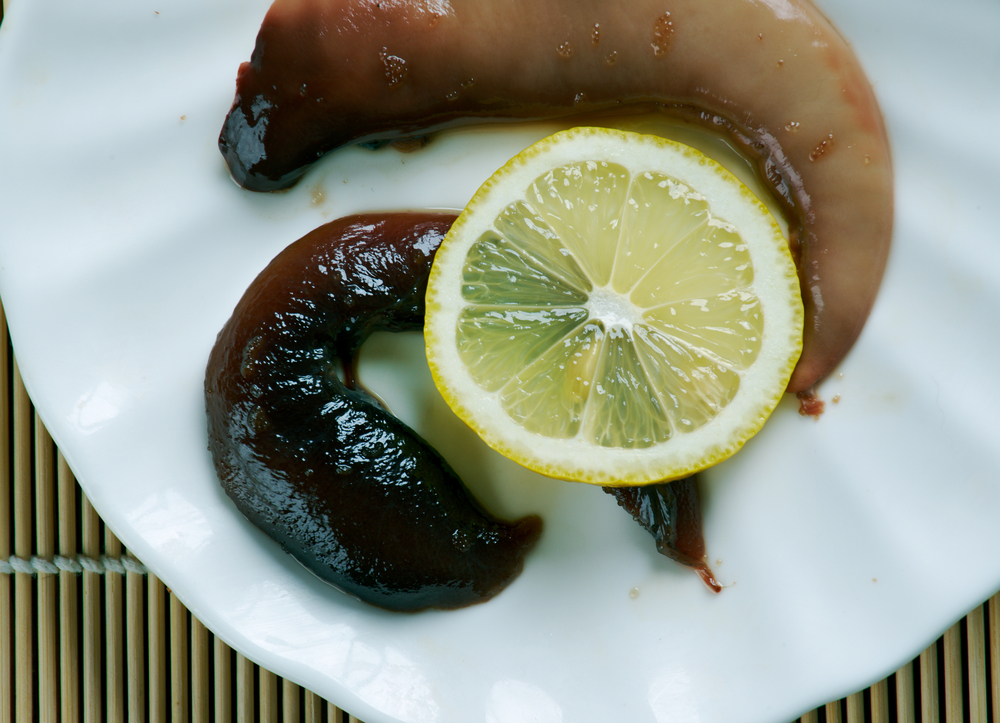

We all know that healthy foods tend to not taste that great, while unhealthy foods taste amazing. That's one of the central dilemmas of life and maintaining good health! But while you can usually find a way to make unhealthy foods appetizing with the right combinations, there are some disgusting foods that are good for you that just take it to the absolute extreme. Below we'll look at twelve foods that are really healthy for you, but are also really hard to get down.
Natto
Fermented, bacteria-filled beans for breakfast anyone? Natto is a traditional Japanese dish made by letting some soybeans sit around with a hearty dash of grass bacillus in them, a bacteria commonly found in the human digestive tract. The result is a concoction that looks somewhat like baked beans with mucus strings all over them, and an extremely potent "cheesy feet" smell to it. So why eat this? Some people actually do savor the flavor, but it also makes for an extremely healthy meal. First of all, the fermentation and the presence of the bacteria actually makes the natto very easy to digest and its nutritional content highly bioavailable. It is very high in protein, potassium, vitamin K, iron, magnesium and dietary fiber with no cholesterol and a good fat profile.
Raw Octopus
Octopus is becoming more and more mainstream as regional Asian dishes become more popular and common around the world. So it's not that unusual to see octopus on restaurant menus anymore. That is, if it's dead and cooked or fried. Still alive and wriggling, with a chance of making you choke? Yeah, that's still not very popular. The eating of live octopus is mostly practiced in South Korea, with Seoul restaurants being the most common place to find it served this way. There isn't really much nutritional advantage to eating it this way, and some people view it as cruel. But it does guarantee that cooking doesn't reduce any nutritional value. The octopus is high in protein, iron, selenium and vitamin B12.
Cod Liver Oil
This healthful supplement is usually taken in pill form, because the raw oil is so nasty! Cod liver oil has a potent fishy taste and smell, but it is prized because it has such a high ratio of healthful omega-3 antioxidants. It's also very high in vitamin D, with most supplement servings providing a full day's amount. And it contains smaller amounts of vitamin A and vitamin E. Taking a capsule formulated to prevent "fish burps" is usually no problem and a healthful addition to anyone's diet. Trying to get down an actual spoonful is a completely different story, however!
Corn Smut
Corn smut isn't actually even technically a food; it's a fungal disease found in certain types of corn (like maize) that is caused by a bacterial infection. That hasn't stopped certain cultures from eating it, however. In parts of Mexico it is even considered a delicacy. When served with a meal, corn smut is usually roasted and added to a soup, a taco or a quesadilla. Surprisingly, corn smut actually enhances the nutritional value of the corn it infects, adding a lot more protein and soluble fiber.
Wheatgrass
Wheatgrass has become heavily championed as an extremely healthful food as of late. It was mostly revived by the raw food movement, though farmers who have it grow native in their area have long known that chewing on some blades can provide a midday pick-me-up. Nobody is going to argue that wheatgrass is not healthy; it's packed with most of the major vitamins and minerals as well as high amounts of fiber and potassium. It's basically a free-growing multivitamin. The problem is that it's also really hard to choke down. Juicing is the closest way to getting it palatable and even then it tastes like you're drinking old lawn trimmings.
Milt
Milt is eaten in many different cultures around the world, but in each case it's the same thing -- the sex organs of male fish that are packed to the brim with their sperm. In Russia it is pickled, in Romania it is fried, in Sicily it is used as a pasta topping. It isn't even so much the taste, which is reportedly fairly mild and inoffensive; it's more the idea that you're eating fish semen, complete with a creamy custard-like texture. It's good for you, though. It's one of the richest individual food items in omega-3s in the world. It's also extremely high in protein while being very low in fat and carbs.
Kimchi
No cultural offense is meant with this selection, as people from South Korea have likely grown up with kimchi and think nothing is off about it. As with most foods that are left to stew in bacteria unrefrigerated for a long time, however, it's a hard sell for anyone else who is coming to it new later in life. Kimchi is a medley of various seasoned and pickled vegetables, left to ferment for a long period. Traditional preparation was simply to bury it in a clay pot for months, though modern production is a little more carefully regulated. If you can get past the knockout smell and sharp taste, kimchi provides you with most of the vital vitamins and minerals, lots of fiber and probiotics to help improve digestion.
Durian
Durian is a spiky fruit that does not look like something you should try eating. It also wards you off with an odor somewhere between onions and sewage that only gets more overpowering if you are actually foolhardy enough to cut the fruit open. So why even bother with this spiky, stinky monstrosity? Because it actually has a nice custardy almond taste if you can get past the smell, and it's packed with potassium, dietary fiber, vitamin C and vitamin B6. It even provides you with roughly nine grams of protein per fruit!
Liver
Liver seems to be a very hit-or-miss proposition for people. Once cooked, some find it to be so similar in taste to beef or chicken that it seems silly to complain about. Some insist it has a unique flavor or quality that makes it absolutely revolting, however. The revulsion does make sense, as the liver is used to filter toxins. The big misconception is that the liver does not actually store these toxins, however. So you aren't getting any toxins with each serving, just tons of vitamins, folic acid and lean protein.
Hardtack
Used as a highly portable biscuit for sea voyages and military campaigns for centuries, hardtack is simply baked and baked and baked until there is virtually no moisture left. This allows it to keep for months without refrigeration, but also makes it hard as a rock and dry as a desert. It had to be dunked in liquid to render it edible, but once choked down it would provide you with plenty of dietary fiber and carbs for quick energy if made with a healthful flour.
Okra
Fried okra is great, everyone loves that stuff. But how often do you see people eat non-fried okra? By itself it has little flavor, but bursts with slimy juice when you bite into it that is uncomfortably similar in texture to mucus. It's a shame that frying is the only way most people can take it as it is rich in vitamin C and dietary fiber.
Bitter Melon
bitter melon At least the name gives you fair warning before you even try it. "Bitter melon" isn't a flattering food name, and that's because it isn't good. Not surprisingly, it's bitter. It also looks like a cucumber that has been exposed to a lot of radiation. But it also happens to be one of the best sources of choline and folate as well as having solid amounts of most of the other vitamins and nutrients.