![Image]()
10 Common Health and Fitness Myths Debunked
Written By
![author]() Lenora Fischer
Lenora Fischer
Updated on 25 February, 2026
4.9 ( 312 Reviews )
In the health and fitness industry, myths are plenty. You will hear them from your friends, your personal trainers, and even your doctors. Some myths are just flat out lies. Other myths are things that were once true but have been disproven through science. So with that said, here are then health and fitness myths that have been dispelled:
Myth: Not stretching beforehand is bad for you
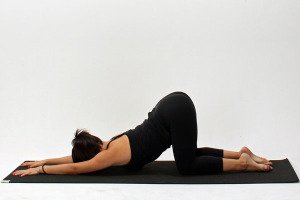
Stretching after a workout is crucial to preventing injury. However, there is no evidence to show that stretching beforehand prevents injury. Additionally, there is some evidence that shows stretching prior to rigorous exercise can destabilize the muscles and limit its range of motion. So instead of stretching, do a light warm up instead.
Myth: Eating too many eggs is bad for you
For years medical experts and health teachers alike have warned against eating too many eggs, stating the amount of cholesterol in an egg yolk is astronomically high. However, there have been no proof that eating too many eggs will cause heart disease. In fact, the cholesterol inside eggs is actually HDL, high density lipoprotein, which is considered a "good" cholesterol. But with that said, eating more than 3-4 eggs a week for a long period of time has been known to increase the build up of plague in the arteries, which CAN increase the chance of a stroke or heart attack. However, the casual relationship between eggs and heart disease is still yet to be determined. So for now, the egg myth is only a myth because there is no medical proof as of yet---not because it is completely false. So to steer completely safe of heart disease, it is recommended that you do not average more than 3 egg yolks in a week. Egg whites on the other hands are fine and are not controversial at all.
Source: https://healthfinder.gov/News/Article.aspx?id=667717
Myth: Swimming is a great fat loss activity
Given the same amount of time, you will burn more calories running on the treadmill than you will swimming at a moderate pace. That is because the buoyancy of the water reduces the body's workload. Thus doing an activity without the leverage (like running) is going to burn more calories.
Myth: You can target your weight loss by exercising that portion of your body
Targeted weight loss is a myth, period. There is no way to lose weight in "all the right areas." If you want to lose weight, you will just have to
5) Myth: You didn't work out hard enough if you're not sore
Your muscles getting sore one or two days after working out is quite common, especially if you haven't worked out that muscle group in awhile. This process of muscle tearing is called Delayed Onset Muscle Soreness (or DOMS). The soreness in the muscles results from microscopic tears resulting from high intensity exertion of the sore muscle group. This tear is the way that muscles recreate themselves---into bigger better muscles. If you have not exercised in awhile, the soreness will be excruciating. However, as you keep at it, your wonderful body will adapt and the muscle tears are not as noticeable (via pain). So if you are not sore after a workout, it just means your body has done its job in adjusting to the increased exertion---and not because you're not working out hard enough.
Myth: Doing 500 crunches a day (or any ab workout) will give you a six pack
If you are extremely skinny with almost no fat on your abdominal area, doing 500 crunches a day will give you a six pack. However, if you're anyone else, no amount of crunches you do will get you that six pack look that celebrities have unless you are willing to burn the fat that is on top of your abdominal muscles lying underneath. So if you have a layer of fat around your abdomen, then do some cardio along with abdominal exercises to get results. Of course, you will also need a healthy diet too.
Myth: Gluten-Free is a Great Diet For Fat Loss
Gluten-free diets has been proven to be a great diet for those with celiac or autoimmune diseases. However, as for fat loss, it still contains a comparable number of calories that foods containing gluten have. Certain elements of gluten-free diets does promote a lifestyle that can lead to fat loss. However, a gluten-free diet alone will not promote any weight loss.
Myth: More sweat equals a harder workout
Many people equate perspiration to calories burned. However, this is not true. Yes more sweat equals more water weight loss. However, water weight does not mean fat loss. It just means your body lost an X amount of pounds of water in your body (that will be replenished when you drink water after your workout).
Our bodies sweat in order to prevent us from overheating. How much we sweat during exercise depends on the temperature of the body, the temperature of the room we are in, how hard we are exercising, and our sweat glands. Some people sweat a lot with very little physical exertion and some people exert a lot with very little sweat. The amount of calories burned in the body does not depend on sweat; it depends on the amount of effort the body puts in and how fast the heart is beating. So the next time you see your friend sweating more than you, don't sweat it (pun intended).
Myth: Squats are bad for your knees
Although squats does exert an extremely high amount of force your knees, it does not mean that your knees cannot support it. Most knee injuries from doing squats is from improper form---not the exercise itself. Learn how to properly position your knees for a proper squat and you will be fine.
Source: Rippetoe, Mark (2007) Starting Strength: Basic Barbell Training, p.8. The Aasgaard Company. pp. 320
Myth: Running is bad for your knees
A Stanford study found that knees of seasoned (and senior) runners were no less healthy than those people that do not run. However, that is not to say that running is without accident. Like any other exercise, form is important in preventing wears, tears, and degeneration of the joints and muscles. So while running itself will not cause any harm to the knees, having incorrect form while running may cause injury that can lead to degenerative arthritis.